Showing posts with label pasta. Show all posts

Sunday, April 24, 2011

Fava Bean Puree for pasta or crostini

IMG_6337

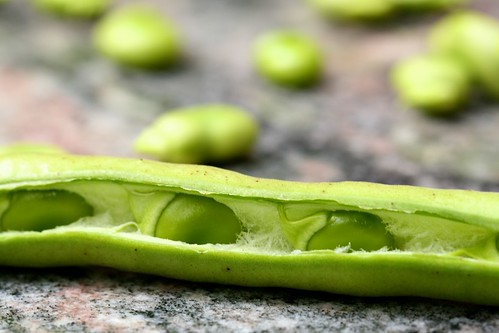
Fava Beans are a sure sign of Spring in Italy and they are ubiquitous this time of year. They are a powerhouse bean, meaning they are full of protein, iron and fiber, and are sometimes called the "meat of the poor."

In Rome, fava beans are eaten as a rite of Spring in a special meal on May 1st when they are prepared in a salad with soft pecorino cheese as Romans head out to the countryside. Some people even carry a fava bean for good luck and it is believed that in doing so, one will never be without the essentials of life.

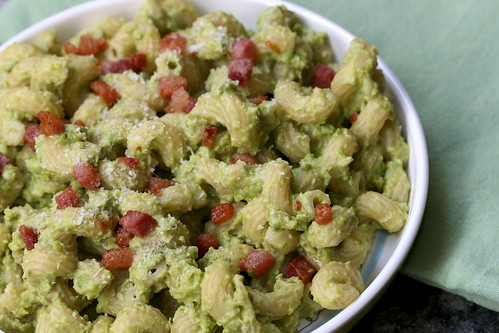
In a variation on the Roman recipe, I made a puree that can be eaten on crostini (toasted bread) or as a pasta sauce as I did today.

IMG_6345

Fava Bean Puree
Widely adapted from Bonny Wolf (NPR's Kitchen Window Archive)

I suggest using a pasta with ridges that will hold the sauce well. I used cavatappi, which incidentally means corkscrew. Because I like to vary the types of grain we eat, this pasta was made with Kamut (read an interesting history of kamut here.) For a vegetarian dish, omit the pancetta but add additional pecorino cheese or some salt.

2 lbs (1 kilo) fresh fava beans (once shelled, this should render 2 cups.)
2 tablespoons crème fraîche
freshly ground pepper
1/4 cup pecorino romano cheese, plus more for sprinkling
1/2 cup pancetta, cubed

Remove the fava beans from their pods and set some water to boil. Boil the beans for 10 minutes and drain. While the beans are cooking, fry the pancetta until lightly browned and drain on paper towels. Put the hot beans into a food processor along with the crème fraîche, pepper and pecorino cheese. Blend until smooth. Combine the puree with the cooked pasta and sprinkle with pancetta and additional pecorino romano to serve.
This makes enough for 2 - 3 servings.

If making crostini, toast a high quality bread and spread with the puree, then sprinkle the pancetta on top.

Saturday, March 19, 2011

Lemony Pasta with Roasted Cauliflower, Pancetta and Crème Fraîche


Any culture has its idiosyncrasies and Italy can be an interesting place to live and observe these quirks. I've never seen a city of people resist Spring to the extent that the Romans do. We've had a few days of bright sun with temperatures in the high 60's (near 19 celsius) and most people on the streets have yet to unburden themselves of their heavy scarves and hats or shed their down jackets.


I grew up in New England, and no matter what the thermostat said in March, I remember putting on last year's short sleeves and running outside to watch the last of the snow melt. Maybe I thought my behavior would encourage Spring to finally arrive. So here in Rome, where we've hardly had a winter by any measure, you'd better believe that I am not putting a jacket back on no matter what.

I buy things that smile at me when food shopping and that's exactly how this dish started. Two gorgeous heads of purple cauliflower, a bag of mezze maniche (literally "half sleeve") pasta that I bought for the name alone, and a walk home to ponder flavors that would pair well.

To welcome Spring, a bowl of short sleeve pasta seemed appropriate.


Lemony Pasta with Roasted Cauliflower, Pancetta and Crème Fraîche
As it turns out, those beautiful heads of cauliflower lost their luster once roasted, kind of like a top model without make up and styling. So feel free to use whatever cauliflower you can find. Paired with some salty but sweet pancetta, crème fraîche and the refreshing zest of lemon, this simple dish made for a nice lunch and goodbye to another winter. Short sleeves optional.

For two

1 large or 2 small heads of cauliflower
3 ounces (100 grams) cubed pancetta
4 large spoonfuls crème fraîche
zest of one lemon
1/2 bag of pasta
parmesan optional

Cut the cauliflower into florets and drizzle with olive oil. Roast at 400 fahrenheit for about 30 minutes.

Cook your pasta al dente.

In a sauce pan, drizzle a little olive oil and fry the pancetta until it begins to brown. Drain out some of the fat onto a paper towel. Turn off the heat and stir in about 4 good soup spoons of crème fraîche and stir to melt. Add the zest of one lemon and toss in the cooked pasta to coat. Serve with freshly ground pepper and some parmesan if you like.

Sunday, February 27, 2011

Pasta with Broccoli and Sausage


Last weekend, the three of us went to our favorite restaurant for a post-Valentines day lunch celebration. Roman sat happily through three courses- an amazing feat for a toddler. We enjoyed this dish made with paccheri which I decided would be easy enough to recreate at home.


Paccheri are a floppy, oversized pasta, whose name is apparently derived from Ancient Greek and refers to a larger than usual hand and a non-hostile "slap," maybe something like a "high five." I've also seen paccheri served stuffed, frequently with seafood, or baked in the oven with cheeses.

There are an estimated 350 pasta shapes here in Italy. I find the names of pasta interesting, descriptive- almost obviously so (maltagliati- "badly cut") and sometimes almost comical (if you think about eating something shaped after little ears, "orecchiette"). Italians seem to inherently know what type of pasta goes with which sauce. When I stopped in to buy the pasta for another dish last week, I told the salesman I needed spaghetti because I was making spaghetti all'amatriciana and his eyes just about popped out of his head in disbelief. The proper pasta for the amatriciana sauce is bucatini (a tubular long pasta), not spaghetti. Well, not according to the street sign welcoming visitors to Amatrice, the town for which the sauce is named. But as a foreigner, it's usually better not to argue about these things.

It's not the first faux-pas I've made. If I'm being totally honest, I don't always follow the golden rule and use abundant amounts of water to cook my pasta because I'm usually too impatient to wait for a huge pot to boil. I never add salt to the water, and I often reheat leftover pasta the next day, something an Italian home cook would never do. Other than that, I do cook my pasta just until al dente, about 2 minutes shorter than American cook times, and after my first few meals here, I quickly adjusted to this consistency.


Here in Rome I buy organic broccoli grown in Sicily. Raw it is truly bitter, but I see no good reason to eat raw broccoli. Steamed or sauteed it becomes sweet, mild enough for a toddler to enjoy. It seems to be his new favorite food!


Paccheri with broccoli and sausage
Inspired by our lunch at Santa Lucia

I recommend using luganega sausage if you can find it. It's a mild sausage that's sold by the meter rather than in links. If it's not available, a mild or spicy Italian sausage will do. For this dish, the top of the broccoli, just the florets, is shaved so finely that it cooks really quickly and adheres nicely to the pasta. Save the stalks to use for something else, like soup or stir fry.

2 tablespoons olive oil
3/4 lb sausage, removed from its casing and broken into small pieces
1/2 a small onion, finely diced
The tops of about 2 heads of broccoli, depending on size (should yield about 3 big handfuls of finely cut broccoli)
paccheri or other large pasta, enough for 4 servings
parmesan or pecorino cheese for sprinkling

In a large frying pan, heat one tablespoon of oil and saute the sausage until brown. Remove from the pan. Add another tablespoon of oil and saute the onion until transparent. Add the finely cut up broccoli (use just the florets, and shave them off the head of broccoli with a sharp knife, and a few tablespoons of water. Cook this for about 10 minutes, adding small amounts of more oil or water so that the broccoli stays moist, then add the sausage back to the pan. Cover and cook for a few more minutes to make sure the sausage is cooked through. Watch carefully so you don't overcook the broccoli- it's prettier when it's still bright green. Meanwhile, cook the pasta according to the package, then drain and toss in the pan with the sauce to coat. Sprinkle with some parmesan or pecorino and serve.

Tuesday, December 7, 2010

Tuscan Wild Boar Ragu


Last Sunday, our feast of epic proportions started with a decadent soup and as a main course, we feasted on Wild Boar Ragù served over fresh tagliatelle.

But first, a short rant: There's "ragu" (pronounced "ragooooo") and then there's ragù. One comes in a jar with a gaudy label and calls itself "America's favorite pasta sauce." How can that be?? Am I that out of touch!? The label even has the accent facing the wrong way, which matters the least but I think bothers me the most! Jarred tomato sauce with sugar versus a luscious meat-based, slow-simmer sauce. I'm sure you can guess which one I'm about to tell you about.

This recipe is from a lovely cookbook called Olives and Oranges, Recipes and Flavor Secrets from Italy, Spain, Cyprus and Beyond, by Sara Jenkins and Mindy Fox. It was a gift in September from my uncle and I've been pouring over the recipes wanting to make everything.

This is slow food at it's best. I shopped for the meat on Thursday, marinated it for 24 hours, simmered it for three hours on Friday, let all the flavors deepen on their own on Saturday and then served it on Sunday. If you can't find wild boar (honestly, here in Rome my butcher said it's very hard to find and we're only 2 hours from Tuscany), ask for pork shoulder. Make sure you order in advance and ask them to cut it into 1 inch pieces (bone-in) because they have the tools required to do this.

During every step of the preparation, I got more and more excited about the sauce. This ragù is a dish that makes you feel like you're sitting in front of a fireplace in a stone house in the Tuscan hills and it's snowing outside, with a pot simmering on the stove full of all the flavors of the countryside.

Tuscan Wild Boar Ragù
From Olives and Oranges
Makes about 6 servings.

It was nice to be able to make this ahead. This was the first meal I think I've ever served where every course was done ahead of time, and there was no stress the day of. If you marinate overnight, count about 4 hours to make the sauce from start to finish. Serve it over the highest quality tagliatelle or pappardelle you can find (or make yourself if you're really ambitious).

Marinade Ingredients:
1 carrot, cut into 1-inch pieces
1 celery stalk, cut into 1-inch pieces
1 medium onion, quartered
3 garlic cloves
1 shallot, quartered
2 fresh rosemary sprigs
8 juniper berries
2 bay leaves
1 tablespoon black peppercorns
2 1/2 cups dry red wine (that's good enough to drink...)
2-2 1/2 pounds bone-in boar shoulder (or pork shoulder) cut into 1 inch pieces (have your butcher do this!)

Combine the above ingredients in a large bowl and add the boar. Cover and marinate in the refrigerator for at least 12 hours, or overnight.

Ragù Ingredients:
1 carrot, cut into 1-inch pieces
1 celery stalk, cut into 1-inch pieces
1 medium onion, quartered
1 garlic clove
1 fresh sprig of rosemary (leaves only)
Fine sea salt and coarsely ground pepper
1/4 cup extra-virgin olive oil
2 cups water
1 tablespoon tomato paste (double-concentrate if you can find it)
1 28-ounce can of whole peeled San Marzano tomatoes, with their juices

For the ragù:
In a food processor, pulse the carrot, celery, onion, garlic and rosemary until finely minced.
Drain the meat, pat dry and discard marinade. Season the meat generously with salt and pepper. Heat oil in a large Dutch oven or other heavy pot, over medium-high heat. Add boar, slowly feeding it into the pot to keep pan temperature from dropping too much, and cook until you have a good sear on one side (about 10 minutes, **this went faster for me). Move browned pieces to side of pot and continue until all meat is seared. Transfer meat to a plate.

Add vegetable mixture and 1 teaspoon salt to the pot and cook, stirring occasionally until vegetables start to brown, about 7 minutes. Return meat to pot, add water and tomato paste, stirring to dissolve paste. Cover and simmer gently for about 2 hours.

Add tomatoes and their juices and simmer for another hour, until the meat is very tender, gently breaking meat into chunks with a wooden spoon as it becomes tender. Remove from heat and let cool.

Remove meat from the pot and shred with your fingers (this gives a county style ragù that will coat your pasta in the appropriate way). Return meat to the pot and reheat gently before serving, or let cool and refrigerate for up to 5 days, or freeze for up to 6 months.
Related Posts Plugin for WordPress, Blogger...